
'Defaulters like Mallya can't be offloaded, but activists like me are. And that too for raising questions.' 'Today, what is the meaning of development?' 'Take over land, water and forest from the Adivasis and hand it over to corporates.' 'I am surprised how a minister who is supposed to protect the forests and the environment is happy reaching out to investors for more and more clearances.'

Categorising the original settlements of gaothans and koliwadas as slums, the authorities in Mumbai are keen to develop them into commercial complexes. The residents are unwilling to cede their rights. Ranjita Ganesan reports

India loses 333 acres of prime forest every day. Instead of working to conserve India's forests and water resources, the environment minister has set up a committee to 'dismantle' the five key laws that provide environmental protection.

Brands such as Gap, Primark and C&A which source some of their garments from Tamil Nadu say they do regular audits to ensure their suppliers comply with their codes of conduct.

On the one had are sanitation oriented social enterprises and on the other are awareness raising campaigns by government.
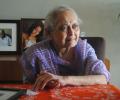
Sheela Bhatt meets Bharti Patel, a truly exceptional mother of our times whose son Dr Vikram Patel was recently ranked among Time magazine's 100 most influential people of 2015, to find out her recipe for a remarkable upbringing.

Acid attack crusader Laxmi Aggarwal's exceptional rise from an accident is sure to inspire you.
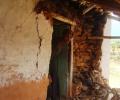
Quake after quake continue to jolt the Himalayan nation. Aid is arriving in Nepal, but its far flung villages remain cut off, two weeks after the April 25 horror

'Single life is pretty good. I like the attention. If I feel lonely, I just call my mom and she sleeps in my bed,' Kalki Koechlin tells Rediff.com contributor Paloma Sharma.

One does not need to be extraordinary to be a hero. Sometimes, cutting your hair can be enough.

'Human rights violations are there in rural areas and in cities. In rural areas it is crude and in the open. In urban areas it is well hidden.' 'Awareness has grown several fold. India has 160 national and state human rights institutions. No other country in the world has this.' 'Unfortunately the right to association, right to assembly, freedom of expression, right to protest and discuss are all being curtailed systematically one by one.'

Pakistan's dismal public health system is rife with mismanagement and a paucity of resources. Amidst this shambolic system, one hospital in Karachi has been providing specialised healthcare to millions. Free of charge. As the Sindh Institute of Urology and Transplantation celebrated 40 years of successful service, Dr Sanjay Nagral visited the facility and met the man who helms it, armed with the simple philosophy that 'No person should die only because they are unable to afford medical expenses.'

My goal is to implement the Sevak project all over India and make the villages true Gandhian villages -- self sustainable in every way, including health, says Dr Thakor Patel, head of the American Association of Physician of Indian Origin's Public Health Committee. Aziz Haniffa reports

'On June 15, 1965, Major A K Afridi of the Pakistan army was captured by Papa's 1 Mahar unit near Vigokot, when he accidently walked into Indian territory.' 'While he was being airlifted to Delhi from Kutch, Major Afridi made a request: He wanted to watch Sangam>, the movie starring Raj Kapoor and Vyjayantimala. It was a request that the Indian Army fulfilled.' 'Major Afridi was sent with armed escorts to watch the movie in Ahmedabad and then sent to Delhi for further interrogation.'

Rediff.com digs into its archives, tracking down Dr M R Rajagopal's sincere efforts of changing lives and changing the way India looks at palliative care.

Sri Lanka's signals -- that it is ready for 'joint fishing' initiatives -- and Tamil Nadu fishermen's sticking to commitments have paved the way for a negotiated settlement on a long festering issue, says N Sathiya Moorthy

The Bharat Ratna conferred on Madan Mohan Malaviya has exposed the frictions within his family, reports Manavi Kapur
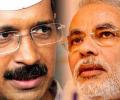
'The AAP is likely to take root in some metropolises -- although it won't be easy to replicate the small-scale Delhi model with equal intensity or cadre-strength in a large state,' says Praful Bidwai.

The AAP has adopted policies in an ad hoc manner, without thinking them through or deriving them from a broader framework. This must change if the AAP is to become a credible alternative, says Praful Bidwai.

'I had been to a village in Haryana. One woman who had four daughters-in-law and three daughters, told me that she had to be awake the whole night to take each of them, one by one to the fields.' 'I am not saying all rapes are because of lack of toilets. 20 to 30 percent of rape cases happen because of the lack of toilets.' Dr Bindeshwar Pathak, founder, Sulabh International, on how India should go about building toilets for all its people in this exclusive interview with Shobha Warrier/Rediff.com

'It's very expensive for a girl to become an actress. I remember I was nominated at all the award shows for Tanu Weds Manu, and conscientiously, like a new actress, I attended all of them and I was bankrupt by the end of it! I had to find a costume stylist, a hair stylist, a makeup stylist...!' Ronjita Kulkarni/Rediff.com gets inside Swara Bhaskar's mind.

Anti-nuclear activist S P Udayakumar, who has been called a threat to the economic security of India by the Intelligence Bureau, speaks to A Ganesh Nadar.

Over Dosas in Mumbai, Oscar winner Megan Mylan tells Vaihayasi Pande Daniel why she chose India and girls empowerment as the subject of her new documentary.

'It is for the first time the voices of the most deferred, the most neglected, the most ignored, the most abused, the most vulnerable - the children-- has been heard. It is a great moment.' 'I always wanted Pakistan and India to have good relationships because I believe that this is very important for the development of both the countries.' 'If children are taught hatred, if they are taught about sectarianism and prejudice, then we can see that there will be terrorism in society." Nobel Peace Prize winners Kailash Satyarthi and Pakistan's Malala Yousafzai were given an ovation after they delivered their rousing speeches in front of a packed audience at a glittering ceremony in Oslo on Wednesday. A day later, they sit down for an interview with CNN's Christiane Amanpour and share their dreams, their hopes for the future. Read excerpts from the interview.
